Hurricane season starts this month. While most people are worried about the wind and rain, there’s a different kind of threat heading for your driveway.
Every year, thousands of cars are submerged in floodwaters. These vehicles are rotting from the inside out, yet scammers find ways to put them back on the market with a “clean” title. It’s called title washing, and it’s a flat-out scam designed to take your hard-earned money.
What Is Title Washing?
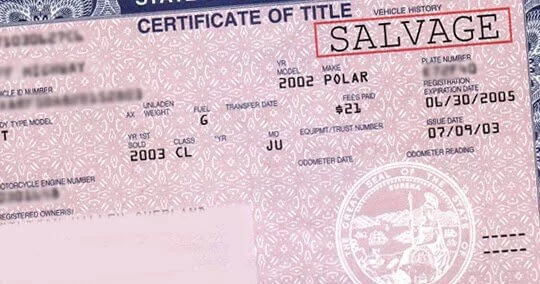
When a car is totaled by a flood, insurance companies brand the title as Salvage or Flood. This tells any future buyer that the car is compromised.
Scammers hate those brands because they can’t sell the car for full price. So, they move the car to a state with laxer laws, register it there, and wash that brand off the document. They’re betting that you won’t look close enough to see the damage they’ve tried to hide.
Why It Matters to You
Driving a flood-damaged car isn’t just a bad investment—it’s dangerous.
Failed Electronics: Saltwater eats through wiring. Your airbags might not deploy, or your engine could simply quit while you’re on the highway.
Invisible Mold: Mildew trapped in the vents and seats is a health hazard you can’t always see.
Structural Rot: If the frame is rusting from the inside, the car won’t protect you in a crash.
5 Ways to Spot a Flood Scam
Don’t trust a piece of paper. Trust your eyes and your gut. Look for these red flags:
The Smell: If the car smells like a locker room—or if it smells like it was just hosed down with industrial-strength bleach—walk away.
The Grit Test: Run your hand under the seats or behind the dashboard. If you feel fine silt or sand, that car was underwater.
Premature Rust: Look at the unpainted bolts under the seats or the springs under the dash. If they’re rusted, that’s a high-water mark.
Mismatched Carpets: If the carpet looks brand new but the rest of the interior is worn, someone might be trying to hide water damage.
The Price Tag: If a deal looks too good to be true right after a major storm, it probably is.
How to Protect Your Wallet
You don’t have to be an expert to avoid getting scammed. Follow these three steps:
Check the NMVTIS: Go to vehiclehistory.gov. This is the federal database that scammers can’t easily manipulate. If it says “Salvage” there, it doesn’t matter what the paper title says.
Get an Inspection: Spend the $100 to have a mechanic you trust put the car on a lift. They’ll see the mud and corrosion that a car wash can’t reach.
Buy Reputable: Stick to dealers with a physical address and a reputation to protect. If a guy is selling a car in a parking lot for cash only, he’s probably looking for an easy mark.
You deserve a car that’s safe and worth what you paid for it. Don’t let a title washer sell you a lemon just because the seasons are changing.
They say April showers bring May flowers, but for many vehicle owners, the start of spring also marks the beginning of flood and hurricane season. As the weather turns wetter, it is the perfect time to talk about a difficult topic: what to do if the rising tide catches your car.
Whether you are dealing with a water-logged driveway now or preparing for the storms ahead, knowing how to handle a flood-damaged vehicle is essential for your safety and your wallet.
Beware of Opportunistic Buyers
After a natural disaster, there is often a surge of opportunistic buyers who try to pick up affected vehicles for very little money. Their goal is usually to pass these cars off as clean units later on without disclosing the damage.
To protect yourself and future drivers, only sell your flood-damaged vehicle to licensed dealers and dismantlers. These professionals understand the legal requirements and intricacies of hurricane and flood vehicles, ensuring the sale is handled properly.
Resist the Urge to Start the Engine
If you walk out to a flooded driveway, your first instinct might be to see if the car still runs. However, the safest course of action is to not attempt to turn on a flooded vehicle yourself.
This is especially critical for hybrid owners or if water reached the wheel wells. Attempting to start the car can cause permanent mechanical or electrical damage. Instead, contact an experienced tow service or a professional shop immediately.
How to Assess the Damage
Before you decide on your next steps, look for these tell-tale signs of water intrusion:
Damp or muddy carpets and upholstery.
Electrical issues or dashboard warning lights.
Milky engine oil, which indicates water contamination.
Debris or silt trapped under the hood.
Document the damage and note how high the water reached. For a deeper dive into what to look for, watch this helpful video guide.
Selling an Owner Retained Unit
Sometimes an insurance company will pay out a claim but leave you in possession of the vehicle. This is known as an owner retained unit. You can absolutely sell these vehicles, but transparency is key. You must disclose the history of the hurricane, fire, or collision damage and include your salvage title to complete the sale.
Replacing a Lost Title
It is very common for important documents to go missing during a natural disaster. If your title was lost or destroyed in a storm, you can apply for a duplicate.
If you plan on selling your vehicle through You Call We Haul, we have resources to help. Click here to find state-specific instructions on how to replace a lost title so you can move forward with your sale.
Don’t let a flood-damaged car dampen your spring. Get an offer today and let our team of experts help you clear your driveway before the next storm hits.
How Will Flood-Damaged Vehicles Impact the Used Car Market?
This hurricane season has been one of the worst in recent memory. And over the past few weeks, we have seen the devastation Hurricanes Milton & Helene have left behind in the Southeast. Based on early estimates, the combined impact of 2024 storms will further push total insured losses in Florida alone to over $100 billion for the fifth straight year.
The aftermath of these storms is going to take a tremendous toll on the federal and state economies. Hurricanes hit U.S. land one on top of the other. Many people have lost their homes, their vehicles, or both. Compounding these sorrows is the sad reality for victims that may find out that insurance doesn’t cover their losses. In Florida, two-thirds of people in flood zones either do not have insurance or do not have the comprehensive coverage needed to pay for flood damage.
Like most of the stuff in our lives, we can sometimes take our cars for granted. But, what if you woke up tomorrow and your vehicle was totaled by flood waters? Even worse; you didn’t have the comprehensive insurance coverage needed to pay for the damage or replace your totaled vehicle? An estimated two-hundred-thousand people have found themselves with a totaled vehicle and without the necessary insurance to repair or replace it.
A HUGE Number of Flood-Damaged Vehicles Will End Up Back on the Road
According to CarFax, approximately 347,000 vehicles have flood damage from the 2024 hurricane season. Thousands of those cars will be filtered back into the marketplace over the next year, and they will be sold all over the country legally. Many will be purchased for salvage, stripped down and sold for parts. However, an alarming number of these totaled vehicles will be repaired with a flood, salvage or rebuilt title and will end up back on the road.
A vehicle with a flood, salvage, or rebuilt title has a significantly lower value than similar vehicles with clean titles. Most of us wouldn’t trust a vehicle that was previously totaled and whose title isn’t clean. Especially with flood vehicles, as they often have electrical/mechanical issues and may even have hidden mold that can cause health problems. It’s not illegal to sell a vehicle with a salvage, flood or rebuilt brand on the title, but any attempt to doctor or cover up a vehicle’s history is illegal.
Nevertheless, after we experience natural disasters there are thousands of scam artists who come out of the woodwork looking to purchase flood-damaged vehicles that have been totaled by insurance companies. According to one study, it was found that about 650,000 of the nearly 800,000 title-washed vehicles on the roads are flood-damaged/total loss vehicles!
How Flood-Damaged Vehicles are Re-sold to Unsuspecting Buyers
Most of us have never heard of Title Washing. What is title washing? Title washing is when scammers will purchase flood-damaged and flood-totaled vehicles dirt cheap, then spend a few dollars to cover-up any major signs of flood damage. They will register the vehicle in a state with looser title laws, thus removing the flood-totaled brand from the title. Now, the vehicle has the appearance of a clean vehicle with a clean title. The scammer will then turn around and sell the vehicle to an unsuspecting buyer for full value. The new owner is now driving around in what is potentially a dangerous vehicle, and/ or a vehicle that may cost them thousands in repairs. If you’re reading this, rest easy! There are a number of ways to uncover flood damage.
How to Avoid Being Scammed into Buying a Flood-Damaged Vehicle
There are plenty of signs a vehicle has been flood-damaged. Many of these signs can be covered up with a little work, but there are a few tell-tale signs that shouldn’t be ignored. The infographic below could arm you with the information you need to avoid becoming a victim.

Statistics
Fitch says Hurricane Milton will push 2024 insured losses over $100 billion https://www.reuters.com/business/finance/fitch-says-hurricane-milton-will-push-2024-insured-losses-over-100-billion-2024-10-10/
Hurricanes refocus attention to scarcity of flood insurance in high-risk Florida https://www.theguardian.com/us-news/2024/oct/11/florida-hurricane-milton-helene-flood-insurance#:~:text=An%20estimated%2035%25%20of%20homes,to%20one%20in%20five%20residences.
CARFAX: 347,000 Cars Flood Damaged in 2024 Hurricanes https://www.prnewswire.com/news-releases/carfax-347-000-cars-flood-damaged-in-2024-hurricanes-302284543.html
Buying or selling a car after a disaster https://www.thezebra.com/resources/driving/buying-selling-after-disaster/#:~:text=Carfax%20explains%20further%2C%20%E2%80%9CIt’s%20surprisingly,on%20the%20road%20at%20risk.