In the 2026 automotive market, selling a junk car is no longer just about finding a guy with a tow truck in the yellow pages. The landscape has become faster and more data-driven, but it has also become noisier. While technology has made it easier to get a quote, it has also paved the way for AI slop—generic, bot-generated offers that look good on a screen but fall apart in the driveway.
At You Call We Haul, we believe the best way to sell your vehicle is to use technology as a tool, not a crutch. Here is how you can leverage modern AI to get a better price, spot phantom offers, and ensure a smooth, human-verified transaction.
Benchmarking Your Value with an AI Co-Pilot
Not all AI is doom and gloom. When used appropriately, AI can help arm you with information that shields you from scammers and low-ball offers.
Before you even request a quote, you can use AI to do the heavy lifting of market research. In years past, you’d have to manually check multiple scrap-value sites and local classifieds. Today, you can use an AI assistant to aggregate this data in seconds. By feeding a prompt to a tool like ChatGPT or Gemini, you can establish a floor price – the absolute minimum you should accept based on current commodity rates.
To get an accurate baseline, ask the AI for the current national average price per ton for automotive steel (which, in early 2026, has been hovering between $145 and $195 per ton). If you know your car’s curb weight, you can estimate its raw material value. Beyond just the metal, AI can help you identify high-demand components. For instance, if your vehicle is a specific year of a Toyota Prius or a Ford F-150, the “part-out” value of the hybrid battery or specialized catalytic converter might be higher than the scrap weight alone. Using AI to scan recent sales data on sites like iScrap App or eBay Motors can give you the leverage to say “no” to a lowball offer.

Defeating the Algorithm Lowball
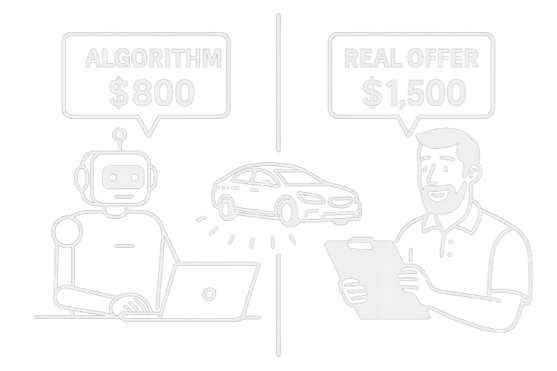
Many modern car-buying sites use automated image recognition to appraise your vehicle. If you provide poor-quality photos, the algorithm is programmed to be risk-averse. It assumes the worst-case scenario—missing parts, engine damage, or severe rust—and automatically drops your offer by 15% to 20% to protect the buyer’s margin.
To get the most cash, you need to feed the algorithm better data. We recommend taking clear, high-resolution photos of the VIN plate, the dashboard (with the odometer visible), and the engine bay. High-quality imagery removes the risk variable from the equation.
Or, avoid AI altogether with a service like You Call We Haul. We have a team of real humans reviewing your photos. Having low-quality images doesn’t automatically reduce buyer bids. However, when a buyer in our network sees a clear photo of a vehicle – no matter its condition – they can bid with confidence (and often with higher offers).
Spotting AI-Generated Scams and Phantom Offers
As AI has improved, so have the tactics of lead-gen scammers. You may encounter sites that offer an “Instant Guaranteed Payout” that seems too good to be true. Often, these are bot-generated numbers designed to capture your contact information. Once they have your lead, they sell it to the highest-bidding local yard, which then shows up at your house and negotiates the price down by hundreds of dollars, claiming the AI made a mistake.
You can spot these phantom offers by looking for a lack of human interaction. A reputable buyer will provide a breakdown of the offer and won’t hide behind a generic “computer says so” explanation. Furthermore, beware of AI-enhanced return fraud or buyers who ask you to use obscure third-party payment apps. A legitimate professional, like those in the You Call We Haul network, will always provide free towing and pay you directly at the time of pick-up.
The Importance of the Local Professional Network
While we use the best tech to connect buyers and sellers, every step of the process includes humans. Liquidating a vehicle requires local expertise to handle logistics and legal title transfers correctly. We strongly recommend working with buyers affiliated with recognized industry organizations that set the standard for ethical business practices:
- Automotive Recyclers Association (ARA): While they focus on the backend of the industry, their members are the most reliable buyers for high-mileage or damaged cars.
- United Recyclers Group (URG): A group of innovators focused on data accuracy and quality, ensuring that the offer you get is based on real-world parts demand.
By sticking to these networks, you ensure that your car is being handled by licensed and insured professionals who prioritize a clean, legal transaction over a quick, shady buck.
Technology with a Human Touch
Selling your junk car in 2026 doesn’t have to be a battle against the bots. By using AI as your research assistant and You Call We Haul as your trusted marketplace, you get the best of both worlds: the speed of modern technology and the reliability of a vetted, human-centered network. We’ve spent over a decade refining this process to make sure you’re protected from the gotchas and scams that plague the internet.
Ready to see what your car is actually worth? Upload your photos to You Call We Haul today and get real, competitive bids from our trusted network. No trickery, no AI slop – just real bids from real buyers
Everyone knows the primary reason to buy a used car instead of a new one: the significantly lower price tag. However, the “cheapest” option isn’t always the best deal. If you don’t choose wisely, a bargain-bin used car can quickly become a money pit.
When shopping, you’ll likely face a choice between a standard used car and a Certified Pre-Owned (CPO) vehicle. While CPOs come with a higher price point, they offer manufacturer-backed inspections and warranties. So, which is right for you?
Here is how to navigate the used car journey and find the best value for your budget.
Know the Difference: Used vs. CPO
A standard used car is typically sold “as-is,” meaning once you drive off the lot, any mechanical failures are your responsibility. Certified Pre-Owned vehicles sit in the sweet spot between “used” and “new.” These are late-model, low-mileage cars that have passed a rigorous multi-point inspection by the manufacturer. While you will pay a premium for a CPO—often a few thousand dollars more—you gain a factory-backed warranty and the assurance that the car has been vetted by experts.
Finding the Right Inventory
The search for a quality vehicle has moved almost entirely online, offering more transparency than ever before.
Depending on whether you want the protection of a CPO or the deep discount of a private sale, you should check these sources:
- Listing Aggregators: Sites like Autolist, Autotrader, and Used Car Search Pro compile thousands of dealer listings in one place.
- Online Retailers: Platforms like CarMax and Carvana offer “no-haggle” pricing and often have their own internal certification programs.
Private Party Sellers: These are individual owners typically found on Facebook Marketplace or Craigslist; this is where you’ll find the lowest prices, though they offer the least protection.
Budgeting Beyond the Sticker Price
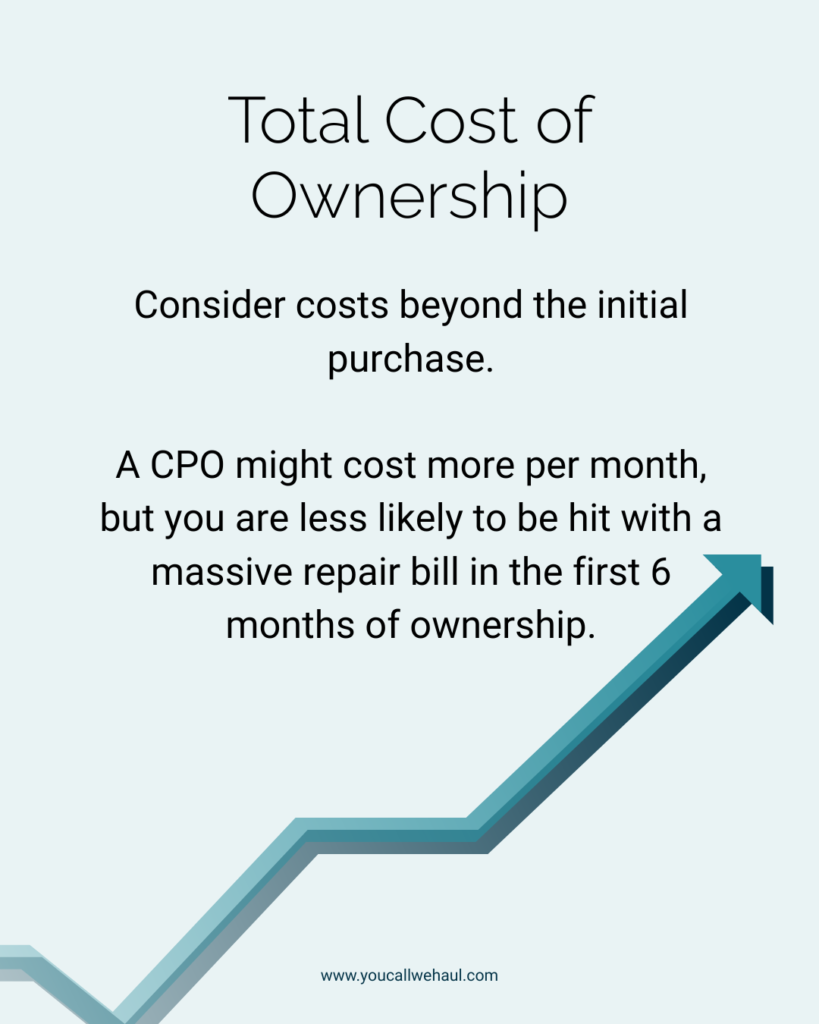
Whether you pay cash or take out a loan, your budget should extend beyond the initial purchase price. A lot of people take out a loan to protect their savings and afford a newer, safer model, but you must also factor in the Total Cost of Ownership. This includes maintenance, insurance, and depreciation. A CPO vehicle might cost more per month, but because it’s usually a late-model car with a warranty, you are less likely to be hit with a massive repair bill in the first six months of ownership.
Your Pre-Purchase Checklist
Once you’ve found a potential car and verified its value through a pricing guide like Kelley Blue Book, you need to perform your due diligence. Before you sign any paperwork, make sure you have completed the following steps:
- Run a Vehicle History Report: Use the VIN to check for past accidents, title issues, and previous owners.
- The “Cold Start” Test: Listen for unusual noises or vibrations when the engine is first turned on.
- Systems Check: Test the brakes, check the oil pressure, and ensure all safety features like airbags are functioning.
- Professional Inspection: For non-CPO cars, it is always worth paying a mechanic for a quick pre-purchase inspection to find hidden “red flags.”
Get Cash for Your Current Car with You Call We Haul
Are you looking to clear out your driveway before your new purchase arrives? You Call We Haul buys cars in any condition, regardless of age or model. We help you sell your old car by bidding it through our nationwide network of buyers, ensuring you don’t just take the first low-ball offer you receive. Our live bidding process gets you the most money possible for your unwanted vehicle.
Junk or sell your car online for cash today! Call us at 866-771-5865.