
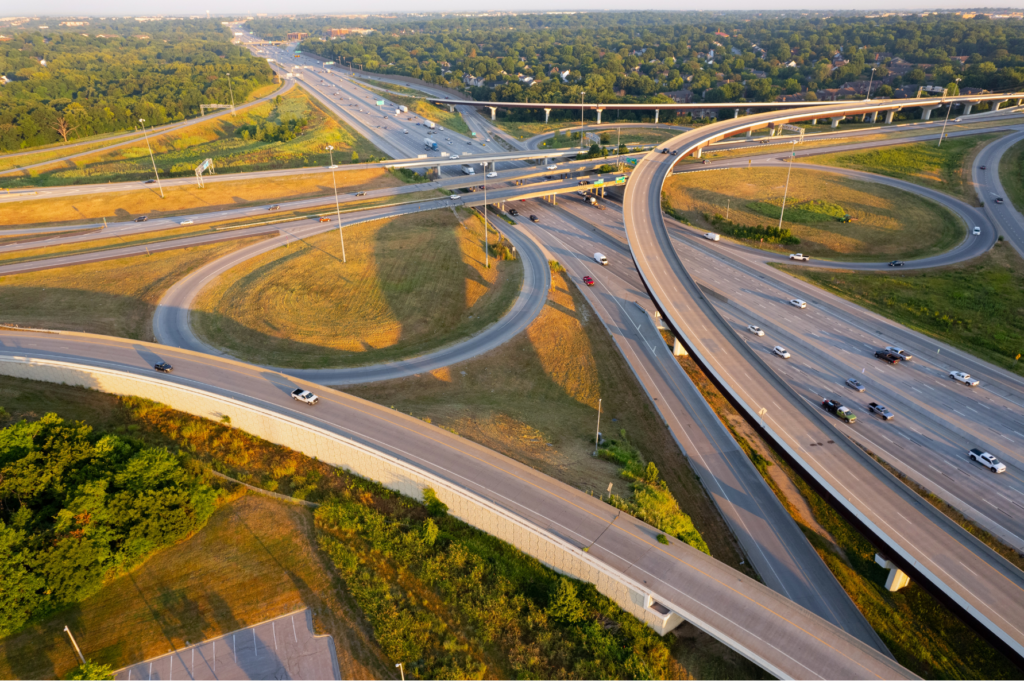
Driving is a joy, with the windows down, good music and the open road in front of you. Behind the wheel you’re in control of where you go, how fast you get there and what you see along the way. It’s all so calming until the evils of traffic, construction and poor road conditions flush it all away. Learn about the top 10 worst roads in America ranked based on road quality, traffic delays and construction to keep driving what it’s supposed to be, fun.
1. I-95: Cross Bronx Expressway and Fort Lee Approach
These roads have long been recognized as one of the world’s worst freight bottlenecks, with short merge ramps and no emergency lane. When cars break down, they are trapped in active lanes, contributing to near round-the-clock traffic. The pavement also suffers from freeze-thaw weathering, cracked expansion joints, and deep rutting caused by the high volume of heavy commercial vehicles. These factors lead to near-constant overnight lane closures, emergency bridge deck rehabilitation, and long-term structural repairs.
2. I-290 / I-294 / I-88 Interchange & The Eisenhower Expressway (Chicago, IL)
ATRI ranks this as one of the nation’s worst freight bottlenecks, costing Chicagoland drivers up to 100 hours each year. The infamous “Hillside Strangle” section forces multiple interstates together and is known to cause frequent rear end collisions, adding to delays. The extremes of Midwest winters create severe pothole fields, surface spalling (when material chips or flakes off), and asphalt buckling. These roads are a year-round zone of reduced speeds and lane shifting due to multiple ongoing construction projects.
3. I-278: Brooklyn-Queens Expressway (BQE) (New York, NY)
With bottlenecks stretching from Verrazzano-Narrows Bridge to the Grand Central Parkway, this stretch of road consistently occupies the upper levels of the nation’s congestion charts, due to its lack of runoff for broken-down vehicles. On top of that, this stretch faces constant construction as the aging bridge is tended to with stopgap patching, structural underpinning, and concrete maintenance, making lane shifts a regular occurrence.
4. I-4 Corridor (Tampa – Orlando – Daytona Beach, FL)
Frequently cited as one of the most dangerous highways in America, this highway combines massive commuter traffic with a high volume of tourists trying to navigate theme park corridors. The combination of intense Florida heat, causing ruts, and torrential downpours makes hydroplaning a likely occurrence on these worn surfaces. A lack of shoulders due to decades of construction turns a single breakdown into miles of gridlock; on top of that, constant lane changes and temporary pavement put a lot of stress on drivers and their vehicles.
Read more: How to Sell a Car That’s Been in an Accident
5. I-285: The Perimeter (Atlanta, GA)
Serving as the main bypass for all freight moving through the Southeast while also featuring two enormous junctions where I-85 and I-75 cross and connect, this 8-12 lane highway combines high average speeds with aggressive weaving and sudden slow downs, generating frequent pileups. The large amount of heavy traffic causes ruts, waves, and grooves throughout the pavement, prompting the need for continuous construction as interchanges are reconstructed and express lanes are added.
6. I-10: Santa Monica & Downtown Freeway (Los Angeles, CA)
Regularly listed on the TomTom Traffic index as one of the densest corridors in North America, with rapid succession exits, blind on ramps, and abrupt stop-and-go waves, this road routinely features a moving speed of 20mph or lower during peak hours. With uneven joint transitions, cracked pavement slabs, and severe surface roughness, this road is as hard on cars as it is on drivers. On top of that, construction is almost perpetual, with tasks such as seismic retrofits, continuous bridge deck repairs, and high-occupancy lane modifications.
7. I-45 Corridor (Houston, TX)
Highlighted as a critical chokepoint by ATRI, this highway is a heavy commuter and industrial highway. Connecting the Port of Houston to the petrochemical corridor and downtown, I-45 has a high crash frequency caused by sudden weather-related visibility drops, narrow lane shifts within work zones and industrial freight mixes. The tropical rainfall combined with the low-lying terrain makes for an abundance of standing water, drainage issues, and asphalt destabilizing roadbed shifting. All of this ensures that this stretch will be under construction for the next decade, where drivers will see active work zones, detours, and temporary lane configurations.
8. I-71 / I-75: Brent Spence Bridge Corridor (Cincinnati, OH to Northern KY)
Designed in the 60s to handle half the amount of traffic it currently does today, this unique double-decker design is a notable bottleneck in the area. Largely due to the lack of a breakdown lane, making any minor incident an instant shut down. Concrete flaking and chipping, deteriorating bridge joint assemblies, and heavily worn pavement make for constant and year-round emergency maintenance and construction through the late 20s. Drivers can expect lane narrows, rolling roadblocks, and active construction as the Brent Spence Bridge Corridor Project wages on.
9. I-93: Southeast Expressway & Central Artery (Boston, MA)
Designed in the 60s to handle half the amount of traffic it currently does today, this unique double-decker design is a notable bottleneck in the area. Largely due to the lack of a breakdown lane, making any minor incident an instant shut down. Concrete flaking and chipping, deteriorating bridge joint assemblies, and heavily worn pavement make for constant and year-round emergency maintenance and construction through the late 20s. Drivers can expect lane narrows, rolling roadblocks, and active construction as the Brent Spence Bridge Corridor Project wages on.
10. I-93: Southeast Expressway & Central Artery (Boston, MA)
Wedged between Puget Sound and Lake Washington, this corridor concentrates high volumes of regional traffic onto a single spine, leaving virtually no room for detours and alternate routes. Constant rain coupled with year-round use of studded tires carved deep ruts into concrete slabs, making water pooling a regular occurrence. This, in turn, increases the risk of accidents from hydroplaning, paired with sudden hill crests in work areas, means that multi-car collisions are not uncommon. Because of this, the corridor requires regular weekend lane closures as the multi-decade WSDOT Revive I-5 plan is underway to repair expansion joints and repave the concrete.
Ready to cash in on your junk car?
At You Call We Haul, we make it effortless to turn your unwanted vehicle into cash. We don’t care if it’s missing a bumper, completely totaled, or hasn’t started in years. We’ll get you a real bid from a real buyer…and the best part? Our buyer comes to you to tow it away for free, and pays you on the spot. Stop letting your metal rust in peace.
Click here to get your free, no obligation cash offer today!